
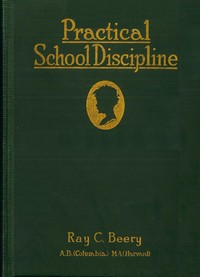
Practical school discipline : Applied methods, part 2 by Ray Coppock Beery
Let's be clear—this isn't a novel. You won't find a plot with a hero and a villain. But there is a story here. It's the story of a working educator in the early 20th century trying to change how schools think about their toughest job: managing student behavior.
The Story
Ray Coppock Beery wrote this book as a follow-up to his first volume, diving deeper into the 'how-to' after establishing the 'why.' He structures it around common, frustrating problems teachers faced (and still face): the chronic talker, the defiant student, the class clown, the kid who just won't try. For each one, he doesn't just prescribe detention. He walks through scenarios. He asks teachers to consider what might be going on in the child's home life, their health, or their social struggles. He suggests practical adjustments to the classroom environment and daily routine that might prevent problems before they start. The narrative is the journey from a punitive model ('How do I make them stop?') to a preventive and guidance-based model ('How do I help them succeed?').
Why You Should Read It
I picked this up expecting a historical curiosity, but I was struck by how relevant it feels. Beery's voice is earnest and practical, not preachy. When he talks about the importance of a teacher's calm demeanor or the futility of public shaming, it echoes what you hear in professional development today. Reading his specific examples—like dealing with a student who steals, not as a criminal, but as a child with a need—is a powerful reminder that good teaching is fundamentally about human connection. It's also a sobering look at how long the education system has grappled with the same core issues. You gain a real appreciation for the progressive thinkers of that era who were fighting for a more compassionate system without any of the research tools we have now.
Final Verdict
This book is a niche read, but a rewarding one. It's perfect for current teachers or education students who want a historical perspective on their field—it'll make you nod in agreement and gasp at some of the period-typical assumptions. History buffs interested in the social fabric of the 1920s will find a unique, ground-level view of American institutions. It's probably too specific for a casual reader looking for a narrative, but for anyone fascinated by how we've tried to 'raise' generations of kids in a classroom, it's a compelling piece of the puzzle. Think of it less as an instruction manual and more as a conversation with a seasoned principal from another time.
Edward Martinez
1 year agoAfter finishing this book, it creates a vivid world that you simply do not want to leave. Absolutely essential reading.
Elizabeth Williams
1 year agoVery helpful, thanks.
Liam Harris
2 months agoThis book was worth my time since the content flows smoothly from one chapter to the next. I learned so much from this.
Mary Lee
1 year agoComprehensive and well-researched.





Sandra Martinez
1 year agoAfter finishing this book, it challenges the reader's perspective in an intellectual way. I would gladly recommend this title.