
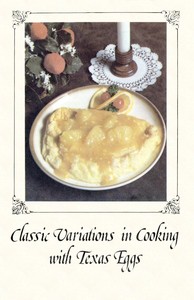
Classic Variations in Cooking with Texas Eggs by Anonymous
Let's get this out of the way: this is not a normal cookbook. 'Classic Variations in Cooking with Texas Eggs' presents itself as a straightforward, regional collection. The first few chapters deliver what you'd expect: hearty breakfast plates, fluffy soufflés, and classic diner-style eats, all with a proud Texas twist. The prose is dry and technical, like an old home economics textbook.
The Story
There isn't a narrative in the traditional sense. The 'story' is the book's own gradual unraveling. After the standard recipes, the content takes a hard left turn. The instructions become less about feeding people and more about... other applications. You'll find detailed methods for using egg whites as a adhesive for bookbinding or a clarifying agent in wine-making. One section meticulously explains how to create a temporary, water-resistant coating for paper using a specific egg-oil mixture. The recipes stop having serving sizes and start listing materials like 'a clean, darkroom-safe tray' or 'parchment of neutral pH.' The final chapter is the most bizarre, describing a preservation technique for 'delicate substrates' that sounds like it belongs in a museum conservation lab, not a kitchen.
Why You Should Read It
I'm obsessed with the personality of this book. Reading it feels like snooping through a stranger's private notebook. The anonymous author had a deep, almost obsessive knowledge of the chemical and practical properties of eggs that goes far beyond cooking. It makes you wonder about their life. Were they a librarian preserving forbidden texts? A homesteader with a very unique set of problems? The lack of a name forces you to focus purely on the work itself, and what you find is strangely beautiful in its precision. It's a puzzle where you have to invent the questions. The thrill is in the speculation.
Final Verdict
This is a book for the curious and the patient. If you need a clear plot, look elsewhere. But if you love found objects, historical mysteries, or just incredibly weird stuff, you'll be fascinated. It's perfect for fans of obscure manuals, archive detectives, or anyone who enjoys asking 'what were they really doing?' It's less a cookbook and more a cryptic artifact you can hold in your hands. Just don't try to make the 'Verdigris Fixative' for dinner.
Susan Jackson
2 years agoComprehensive and well-researched.
Paul Moore
10 months agoAs someone who reads a lot, it creates a vivid world that you simply do not want to leave. This story will stay with me.
Sarah Harris
3 months agoHonestly, the emotional weight of the story is balanced perfectly. Exactly what I needed.


Lucas Wright
1 year agoComprehensive and well-researched.